
Twenty days prior to my arrival as a new faculty member within the Leadership and Counseling Department at the University of Idaho, I published a book review where I dis- cussed my excitement at having the opportunity to serve in a new environment that was racially, culturally and socially diametrically opposite to the environment I was leaving.
Although I had attended a majority White institution, Auburn University, for graduate school and taught at the same institution, I was leaving an institution, Tuskegee University, which was majority Black. The president was Black, the dean I reported to was Black and the large majority of faculty, staff, students and administrators were Black.
I knew that coming to the University of Idaho would require adjustment on my part not only because of the obvious differences
If someone approaches an issue in a way that is outside of the social norm, there can be a visceral negative reaction — a glare, undesirable verbal response or non-acknowledgment of the perspective of the person.
due to racial composition at the university but also due to the change in my responsibilities as I was transitioning from the role of administrator to a tenure-track faculty member. So I sought out resources such as the book Black Faculty in the Academy, edited by Fred A. Bonner II and colleagues.
I reviewed resources specifically related to Black faculty serving at predominantly White institutions because I wanted to ensure that my transition to the new phase in my career would be successful. This investment of time is not new or unique to minoritized populations, whether they are ethnic minorities, members of the LGBTQ community or women. Most of us have learned to study the expectations of the dominant culture and acculturate to ensure that we are successful in American society.
However, it has been my experience working in various predominantly White environments that many leaders and colleagues have been woefully unprepared for the integration of people with differ- ent backgrounds in their workspaces. Very few have taken the time to learn about the unique needs and perspectives of minoritized populations — particularly, why they may do things differently or may have varying perspectives. If someone approaches an issue in a way that is outside of the social norm, there can be a visceral negative reaction — a glare, undesirable verbal response or non- acknowledgment of the perspective of the person.
History, context and experience shape everything, and so it is important that we take the time to learn about each other’s differences. It is important that leaders move away from just tolerating people who are different and learn to respect and acknowledge that different does not mean deficient. I have often heard people say, “I treat everyone the same.” But this is often not true.
I would not expect a 21-year-old Latino male to be treated the same way a 75-year-old Asian woman might be. To me that is fine as long as we are truthful about it. People with differing back- grounds have varying worldviews, desires and needs, and age, race and gender matter, period. And if we are to be effective leaders, we must not only acknowledge that but embrace it.
So how can leaders begin to do their homework to ensure that diverse faculty, staff, students and administrators are retained? Here are a few ideas:
Seek out resources that specifically address the needs of particular identity groups. For instance, the experience of an African-American who was born and raised in the United States may be different than that of a Latinx, Asian, or Native American. There are plenty of books on the specific experiences of particular diverse groups.
Avoid negative assumptions. When someone operates outside of the White norm, there is a tendency to assume that they are not approaching the situation correctly. Some of this stems from not having a connection with the person. If leaders showed that they genuinely cared about diverse staff and faculty and were invested in their success and then asked them why they approached things the way they did, the staff or faculty members would probably be more open to sharing their perspectives.
Understand that equity and equality are not the same thing. Equality in this case means that everyone gets the same thing no matter what their unique needs or desires are. Equity means that in some cases some individuals will get more or less of something, given their advantage or disadvantage, their needs or desires. We often care more about perceptions of equality than taking into account that many minoritized groups have been disadvantaged and are making progress in spite of their circumstances.
Be a lifelong learner. Being culturally proficient is a part of that process. It is important that cultural competency be at the center of ongoing training and discussions of operational improvement within departments. There should be no opt-out clause. If you want to be an effective leader and you want to develop a team of effective leaders, this should be an integral part of your ongoing operational improvement process.
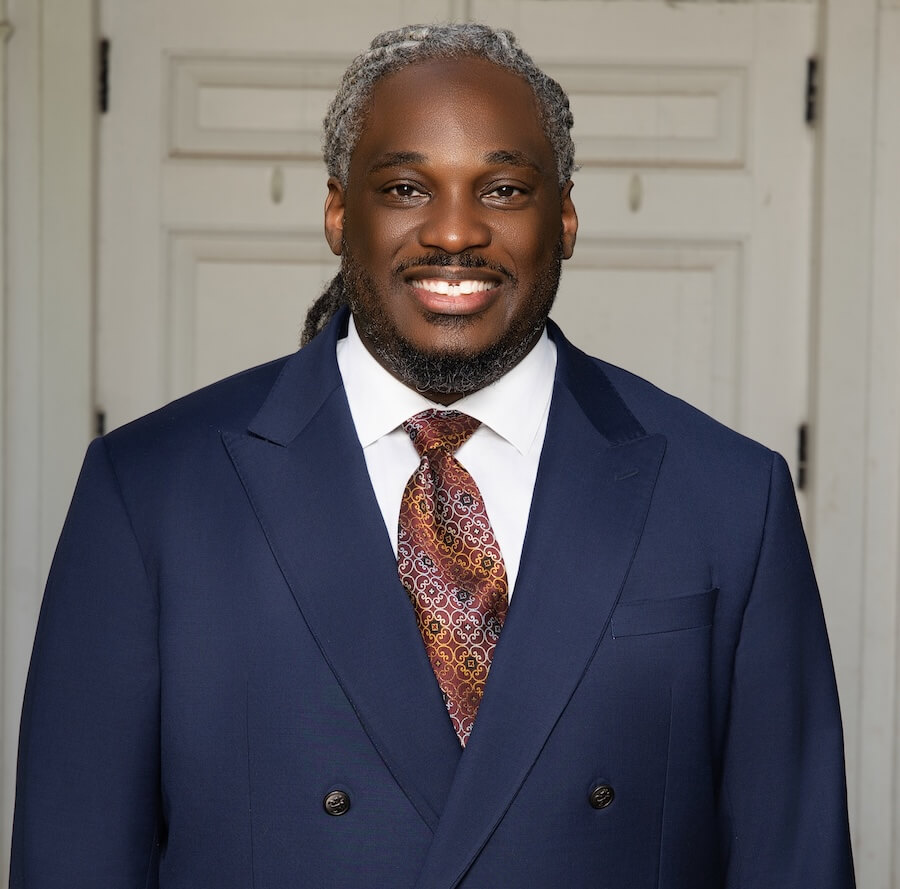
Dr. Sydney Freeman is an associate professor of Higher Education Leadership and Qualitative Research at University of Idaho.
Original Article can be found on www.diverseeducation.com